
Aristotle Portable Sound System Testimonial by Primetime Host Jeffrey Hayzlett
Primetime TV and Radio Host, Former Fortune 100 CMO and Guest Celebrity Judge on NBC's Celebrity Apprentice.
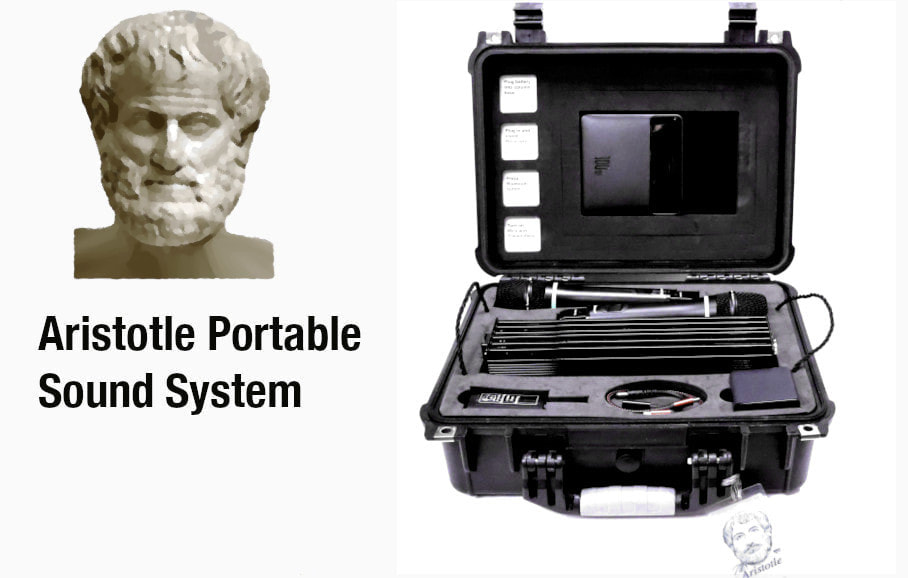
AristotleIntroducing Aristotle, the new, lightweight, portable sound system designed to enhance your presentations - weighing in at under 16 pounds, this system is perfect for presenters, teachers, and other on-the-go professionals.
With Althar's unique Connect&Use technology you'll spend less time worrying and fussing with your sound system and more time communicating your message. Its compact, sleek Beam-forming column produces volumes of articulate sound. Connect&Use technology means simple use and quick set up, allowing you to focus on delivering your message without any hassles. The system can be operated from its high output rechargeable power source or connected to 110 volt power. The ATA approved case makes travel a snap and can usually be taken as carry-on! (16"x13"x6.87" ,system weight under 16 lbs.) 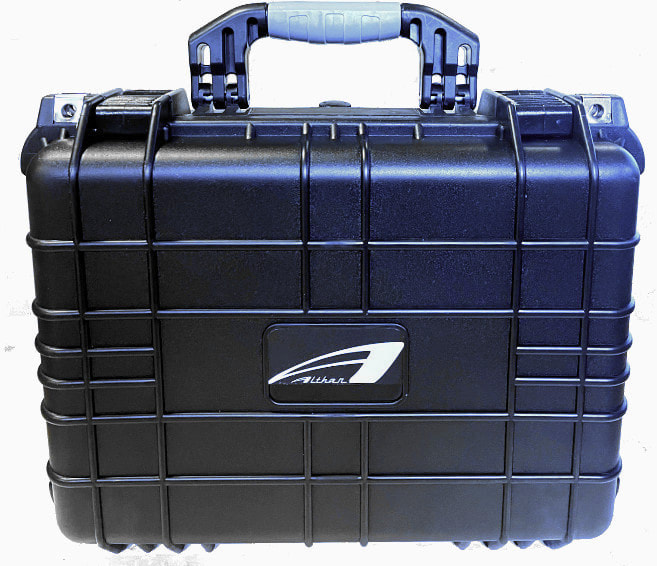
|
Seminars, teaching and presentations.Whether you're hosting a seminar, teaching a class, or delivering a speech, this system will ensure that your audience can hear every word clearly and with similar volume from the front to the back of the room. Equipped with advanced audio processing technology, this sound system delivers clear, immersive sound that will captivate your audience and leave a lasting impression. With its versatile connectivity options including Bluetooth, you can easily connect your laptop, tablet, or smartphone to the system for PowerPoint presentations.
So if you're looking for a high-quality, reliable, portable, battery operated sound system that can keep up with your busy traveling schedule, look no further than Aristotle. With its lightweight design, advanced features and small size it's the perfect choice for presenters, teachers, and professionals who demand the best. 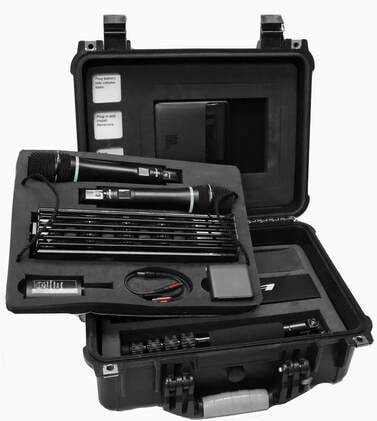
|
The Aristotle battery-powered portable sound system with beam-forming loudspeaker offers several technical advantages:
- Portability: Less than 16 lbs. in an ATA case featuring battery or 110volt power, making it easy to transport and use in a variety of settings.
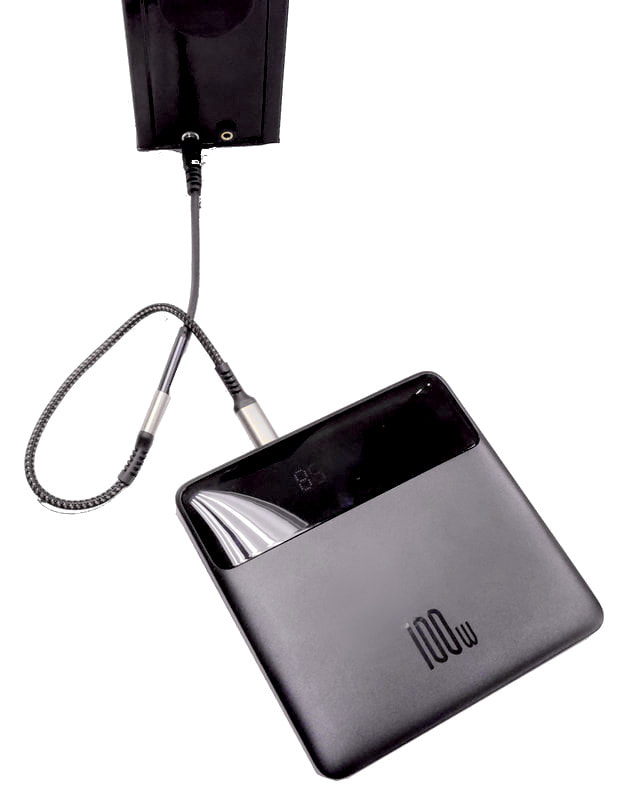
- Energy Efficiency: Aristotle is energy efficient and can operate for extended periods on a single charge. All wireless mics, transmitters and receivers run for hours between a charge and with 4 independent mics there is always the solution to meet your needs. Aristotle supports long run times without the need for recharging or the hassle of replacing batteries.
- The Beam-forming Aristotle Column: Our beam-forming loudspeaker is designed to provide ultra wide coverage with little loss of volume at distance. Aristotle delivers sound more evenly across the whole listening audience, resulting in a more immersive experience with greater clarity and ultra high intelligibility.
- Sound Quality: Aristotle offers superior sound quality, with a wide dispersion pattern which doesn't throw sound to the ceiling and floor. That means reduced sound reflections, echo and reverberations. The result is crystal clear, more natural-sounding audio that delivers your message professionally.
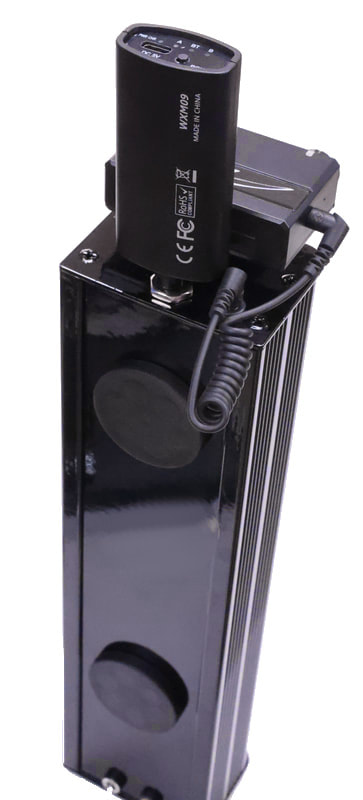
- Flexibility: Aristotle is highly flexible and can be easily adapted to suit different environments and applications. With features such as wireless auto linking mic connectivity and onboard auto-mixing, Aristotle fits a wide range of events and venues, making it a versatile and reliable solution for any sound reinforcement need. It even features a magnetic base and back to help secure it to metallic desks, podiums, White boards or steel structures which makes it perfect for walking tours of major buildings and plants.
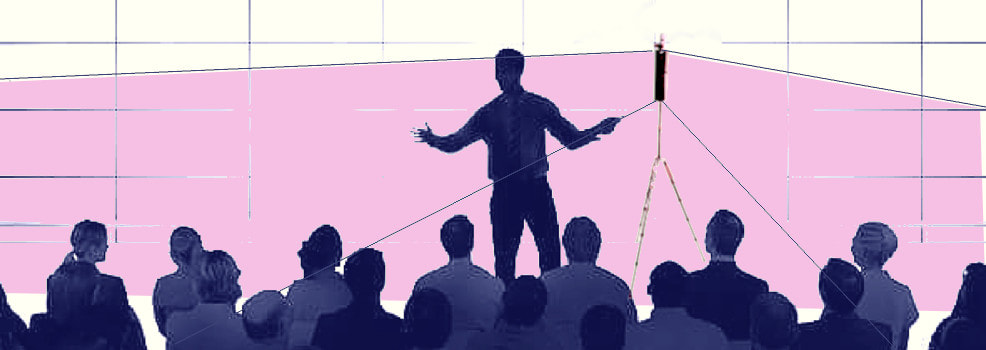
The Aristotle Beam-forming Loudspeaker
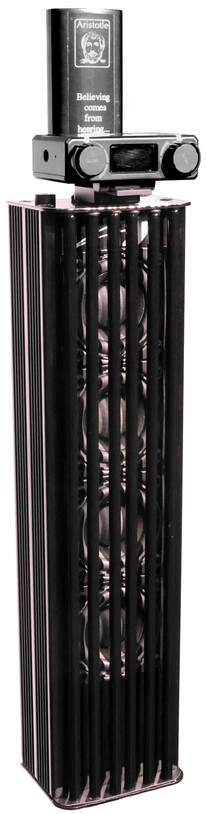
Everything sets up in just minutes.
Our 12 inch Aristotle packs a real punch and can fill large rooms.
Plug the wireless receivers into the Aristotle column and choose your microphone from Handheld or Over-The-Ear type.
Choose from battery or wall power.
Mount the magnetic column to its tripod, steel whiteboard or cabinet.
Aristotle's Connect&Use design simplifies use.
Over the ear mics are adjusted at the column mounter receiver.
Over the ear mics can be muted at the receiver or the transmitter.
Handheld mics feature a volume control and channel selector.
Batteries last for hours!
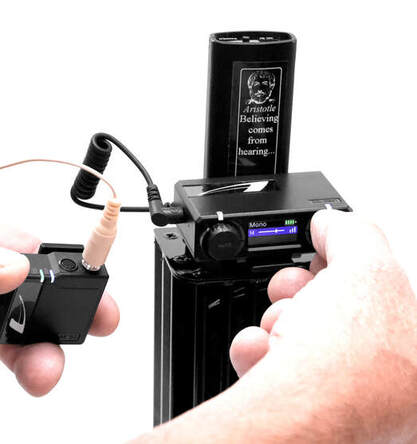
The Over-The-Ear mini clip-on transmitters auto-link with the receiver atop Aristotle and begin working in seconds.
The receiver and transmitters re-charge when placed in the custom storage case which features its own Li-Ion battery. You can charge them 2-3 times before you have to plug in the case.
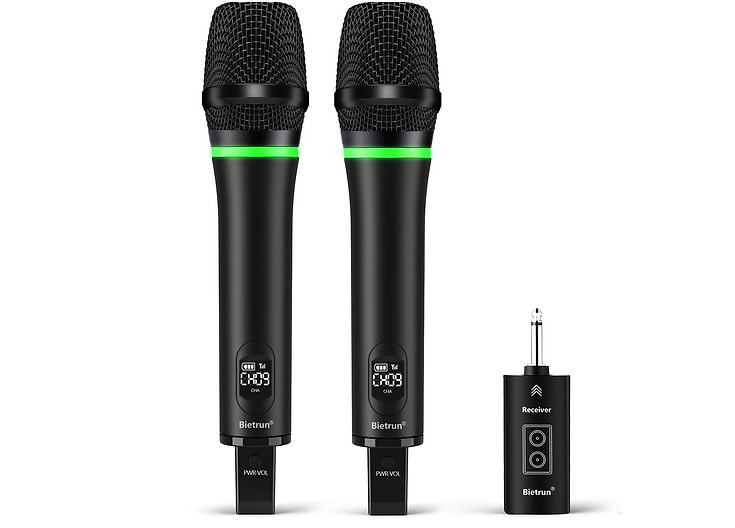
Plug the Handheld wireless receiver with Bluetooth into the top of Aristotle and link your laptop to the receiver and you're set for a PowerPoint presentation.
You can even add a couple of handheld wireless mics to pass around the room which link in seconds!
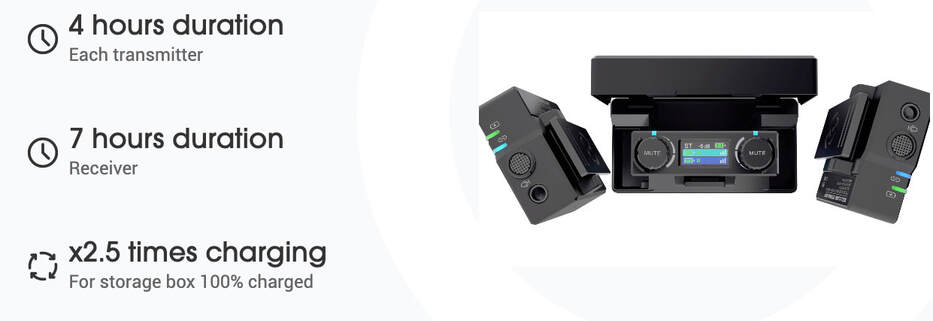
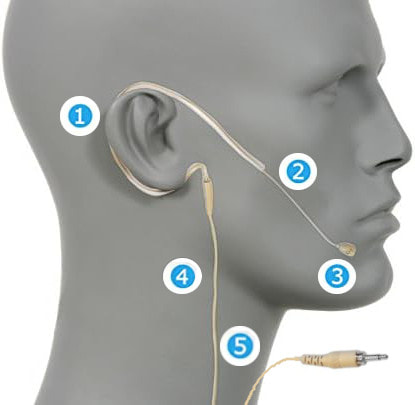
Includes 2 discreet Over-The-Ear mics with Mini, clip-on transmitters.
2 - Professional Over-The-Ear Mics
|
|
And 2 Handheld Wireless Microphones with Plug-in receiver featuring Bluetooth!
Handheld Mics enclose powerful Lithium batteries
|
|
Aristotle features a magnetic back & base and comes with a 20 hour power source!
|
|
|
Call 216-408-9860 for more information and any questions.
|
Prop. 65 WARNING: This product may contain chemicals known to the State of California to cause cancer, birth defects, or other reproductive harm.
|